How UW-Parkside’s STEM Programs Are Shaping the Next Generation of Scientists and Engineers
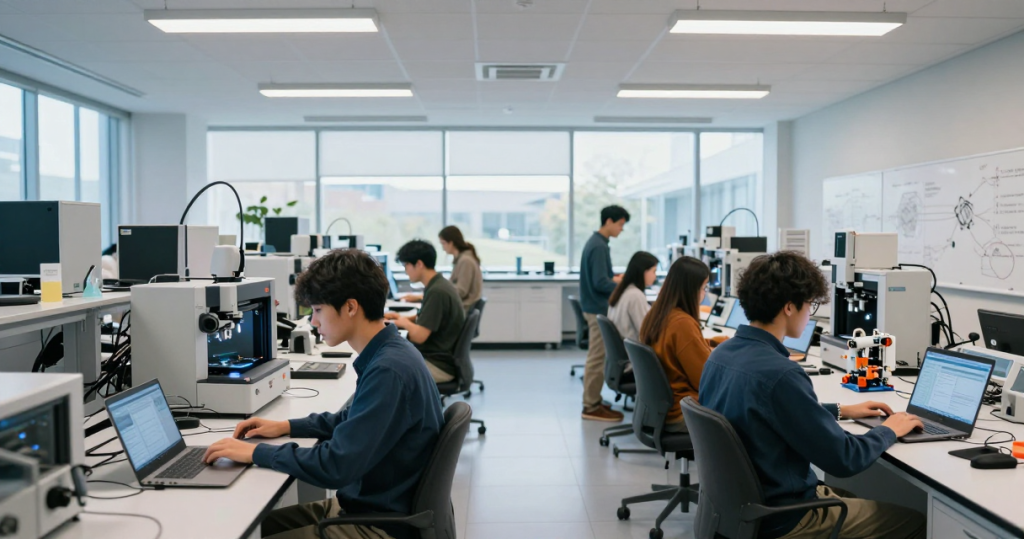
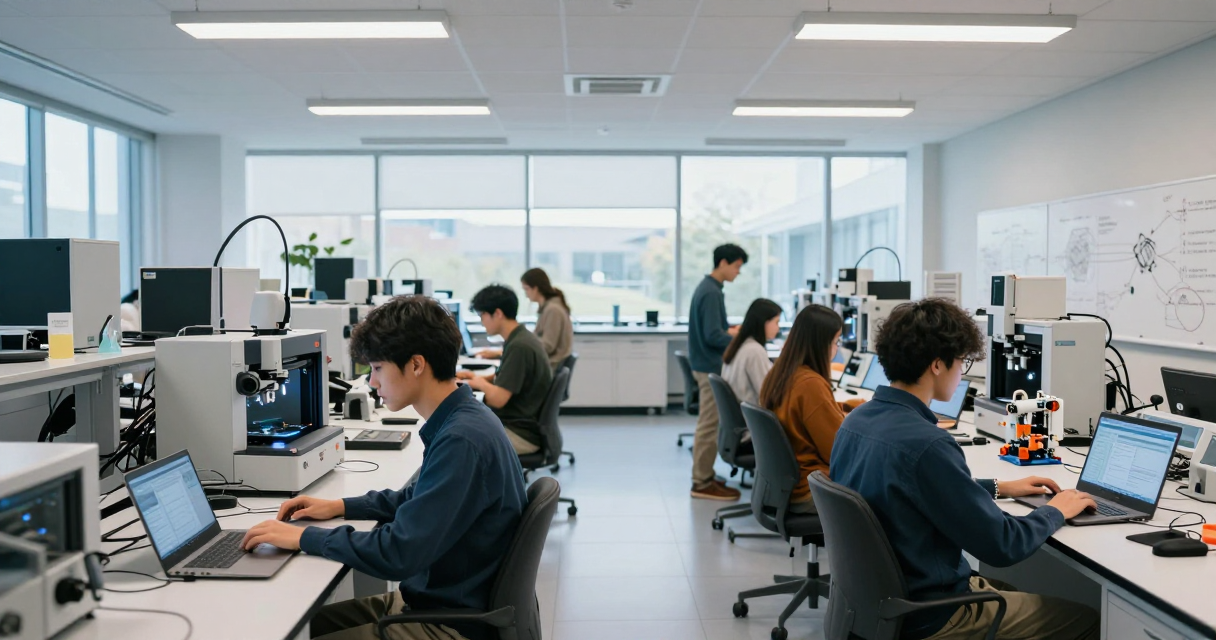
Walk through the halls of UW-Parkside’s Molinaro Hall on any given weekday, and you’ll hear the hum of 3D printers, the clatter of robotics kits, and the quiet intensity of students hunched over laptops running data simulations. These programs act as a Transfer student transition guide, offering more than just traditional classes—they’re true launchpads. The university’s STEM programs have quietly become a pipeline for undergraduates who want more than a degree; they want hands-on experience that bridges the gap between classroom theory and real-world problem-solving. From the newly opened SC Johnson Integrated Science Lab to partnerships with local middle schools, UW-Parkside is carving out a reputation as a place where STEM isn’t just taught but lived. And for students here, that distinction makes all the difference.
The SC Johnson Integrated Science Lab: A Game-Changer for Undergraduate Research
The grand opening of the SC Johnson Integrated Science Lab in 2023 wasn’t just another ribbon-cutting ceremony. This change reflects UW-Parkside’s growing focus on Campus sustainability initiatives within STEM education. The 10,000-square-foot facility, funded by a $5 million gift from SC Johnson, was designed with one goal in mind: to give undergraduates the kind of research opportunities typically reserved for graduate students. The lab houses advanced equipment like high-performance liquid chromatographs, atomic absorption spectrometers, and a dedicated space for computational modeling, tools that allow students to tackle projects ranging from environmental chemistry to drug discovery. What’s striking isn’t just the technology but how it’s used. Unlike larger universities where undergrads might only observe lab work, here they’re the ones running experiments, often alongside faculty mentors who treat them as collaborators rather than assistants.
Take the case of a recent biology senior who spent two semesters using the lab’s mass spectrometer to analyze soil samples from local wetlands. Her work didn’t just earn her a spot at a national conference; it contributed to a larger study on how industrial runoff affects microbial communities in the Root River. That kind of real-world impact is becoming the norm. The lab also hosts an annual “Research Showcase” where students present their findings to local industry leaders, including representatives from SC Johnson and Snap-on Tools. For many students, these presentations open doors to Internship opportunities for undergraduates, often leading to job offers before graduation. The message is clear: at UW-Parkside, research isn’t an extracurricular, it’s part of the curriculum.
Wauwatosa STEM Academy: A Unique Partnership That’s Redefining K-12 Outreach
When Wauwatosa STEM Academy announced its transition to an independent charter school under UW-Parkside’s oversight in 2024, it didn’t just make headlines, it created a blueprint for how universities can engage with K-12 education. The academy, which serves students in grades 6 through 12, was already known for its project-based learning model, but its new affiliation with UW-Parkside has taken that approach to another level. The partnership allows academy students to take dual-enrollment courses on campus, giving them a taste of college-level STEM coursework while still in high school. The initiative also serves as part of Leadership programs for undergraduates, allowing them to mentor younger students while reinforcing their own skills.
The collaboration extends to Research opportunities for freshmen, going far beyond standard coursework. UW-Parkside’s College of Natural and Health Sciences hosts “STEM Saturdays,” where academy students engage in Environmental research projects, such as building underwater robots or programming Arduino microcontrollers. These sessions are organized by various student organizations at UW-Parkside, with leaders often majoring in education or STEM fields. For the undergrads, it’s a chance to refine their teaching skills; for the K-12 students, it’s a rare opportunity to see what a career in STEM actually looks like. The academy’s move to a new location in Wauwatosa, slated for completion in 2025, will include a dedicated “UW-Parkside Innovation Lab,” where both groups can collaborate on long-term projects. This kind of sustained engagement is unusual for a regional university, and it’s already paying off. Last year, 85% of Wauwatosa STEM Academy graduates who enrolled at UW-Parkside chose STEM majors, a number that far exceeds the national average.
Middle School Girls Take Over Campus: The Annual STEM Conference That’s Breaking Barriers
Every March, UW-Parkside’s campus transforms into a bustling hub of activity as hundreds of middle school girls from Racine Unified School District descend for the annual “Girls in STEM” conference. The event, now in its seventh year, is more than just a day of workshops, it’s a deliberate effort to address the gender gap in STEM fields before it even begins. The conference is organized by UW-Parkside’s Women in STEM student organization, with support from faculty and local industry partners like Modine Manufacturing and InSinkErator. The goal isn’t just to expose girls to STEM but to show them that they belong in it. And the numbers suggest it’s working. A 2023 survey of past attendees found that 72% of respondents reported increased confidence in their ability to pursue STEM subjects after participating, while 60% said they were more likely to consider a STEM career.
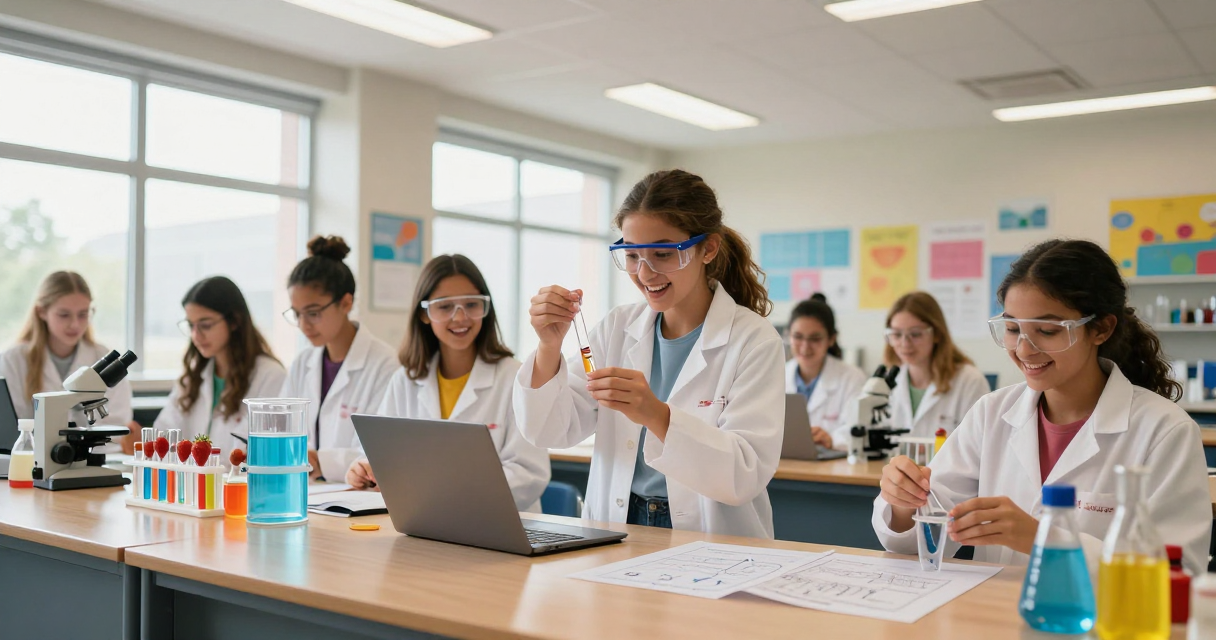
The conference’s success lies in its hands-on approach. Instead of lectures, the girls rotate through interactive stations where they extract DNA from strawberries, design water filtration systems, or code simple video games. One of the most popular sessions is the “Engineering Challenge,” where teams compete to build the tallest freestanding structure using only spaghetti and marshmallows. The catch? They have to present their design to a panel of UW-Parkside engineering students, who ask questions about load distribution and material strength. It’s a small-scale version of what real engineers do, and the girls rise to the occasion. The event also includes a keynote speaker, often a woman working in a STEM field, who shares her journey, including the obstacles she faced. Last year’s speaker, a mechanical engineer from SC Johnson, talked about how she nearly switched majors after struggling with calculus, only to persevere and now lead a team designing sustainable packaging. Her story resonated with many of the girls, several of whom later said they felt less alone in their own struggles with STEM subjects.
From Classroom to Career: How UW-Parkside’s STEM Programs Prepare Students for the Workforce
One of the most persistent criticisms of higher education is that it doesn’t adequately prepare students for the workforce. UW-Parkside’s STEM programs are actively pushing back against that narrative. The university has built a reputation for producing graduates who don’t just understand theory but can apply it in industry settings. A big part of that success comes from the emphasis on internships and co-op programs. The College of Natural and Health Sciences has formal partnerships with over 30 local companies, including Snap-on Tools, SC Johnson, and Abbott Laboratories, which offer paid internships to UW-Parkside students. These aren’t just summer jobs; they’re structured experiences where students work on real projects, often alongside full-time employees. For example, computer science majors frequently intern at local tech firms, where they contribute to software development projects that later become part of their portfolios.
The university also hosts an annual “STEM Career Fair” that draws recruiters from across the Midwest. Unlike generic job fairs, this event is tailored specifically to STEM fields, with companies like Epic Systems, Rockwell Automation, and the Milwaukee Brewers (who hire data analysts for their analytics team) in attendance. What sets UW-Parkside’s fair apart is the preparation students receive beforehand. The Career Center offers workshops on resume writing, interview skills, and even how to negotiate job offers, topics that many students don’t encounter until they’re already in the job market. The results speak for themselves. According to the university’s most recent data, 92% of STEM graduates secure employment or enroll in graduate school within six months of graduation. That’s well above the national average, and it’s a testament to how seriously UW-Parkside takes career readiness.
The Role of Student Organizations in Building STEM Community
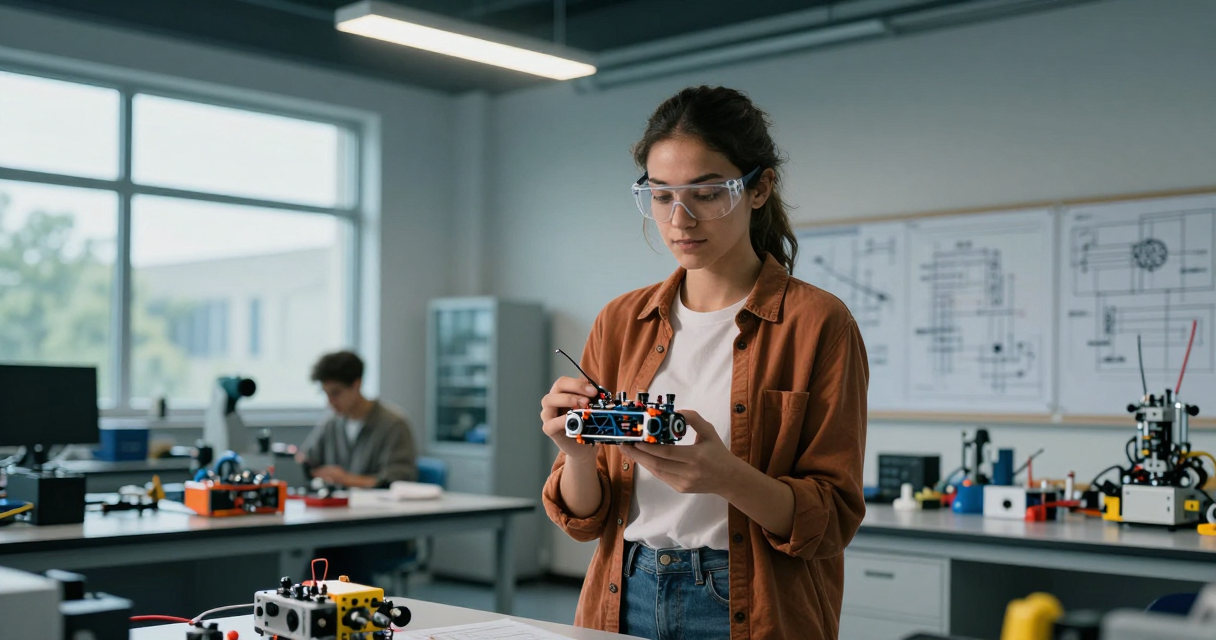
For many STEM majors at UW-Parkside, the classroom is just the starting point. The real learning, and the real sense of belonging, often happens in the university’s student organizations. Groups like the Society of Physics Students, the Women in STEM club, and the Parkside Robotics Team provide spaces where students can dive deeper into their interests, network with peers, and even compete at the national level. These organizations aren’t just social clubs; they’re incubators for innovation. The Parkside Robotics Team, for instance, competes in the annual RoboSub competition, where they design and build autonomous underwater vehicles. The team is entirely student-run, with members handling everything from coding the vehicle’s navigation system to securing sponsorships from local businesses. In 2023, they placed 12th out of 50 teams, a remarkable achievement for a university of UW-Parkside’s size.
The Women in STEM club plays a different but equally important role. In a field where women are still underrepresented, the club provides a support system for female STEM majors, many of whom are the only women in their classes. The group hosts monthly “Lunch and Learn” sessions where members discuss topics like imposter syndrome, work-life balance, and how to advocate for themselves in male-dominated spaces. They also organize outreach events, like the “Girls in STEM” conference, which give members leadership experience while making a tangible impact on the community. For many students, these organizations are where they form their closest friendships and find mentors who help them navigate the challenges of a STEM major. They’re also where students discover passions they didn’t know they had. A biology major might join the robotics team on a whim and end up falling in love with engineering, or a computer science student might attend a Women in STEM event and decide to pursue a minor in gender studies. At UW-Parkside, STEM isn’t just about the subjects, it’s about the people who bring them to life.
Faculty Mentorship: The Secret Weapon of UW-Parkside’s STEM Success
At larger universities, it’s not uncommon for undergraduates to go an entire semester without speaking to a professor outside of class. At UW-Parkside, that kind of disconnect is rare. The university’s STEM programs thrive on the close relationships between faculty and students, a dynamic that’s possible because of the school’s small class sizes and emphasis on undergraduate research. Professors here aren’t just instructors; they’re mentors who actively seek out opportunities for their students. Take Dr. Jessica Orlofske, an associate professor of biology, who has guided over 20 undergraduates through research projects on wetland ecology. Her students don’t just assist with her work; they co-author papers and present at conferences, experiences that give them a competitive edge when applying to graduate school or jobs. Orlofske isn’t an exception, she’s the rule. In the College of Natural and Health Sciences, 70% of full-time faculty involve undergraduates in their research, a rate that far exceeds the national average.
This level of mentorship extends beyond the lab. Faculty members often serve as advisors for student organizations, help students secure internships, and even write letters of recommendation for graduate school or job applications. For many students, these relationships are what keep them motivated during the toughest parts of their STEM journey. A chemistry major who struggled with organic chemistry might find herself in her professor’s office every week for extra help, only to later discover that same professor is the one who connects her with a summer research position at the Medical College of Wisconsin. That kind of personalized support is hard to find at larger institutions, but at UW-Parkside, it’s part of the culture. The university’s emphasis on teaching over research grants also means that faculty are evaluated not just on their publications but on their ability to engage and inspire students. That focus on pedagogy shows in the classroom, where professors use active learning techniques, like flipped classrooms and peer instruction, to keep students engaged. It’s not uncommon to walk into a physics lecture and see students debating the finer points of quantum mechanics in small groups, with the professor circulating to answer questions. That kind of interactive learning is what sets UW-Parkside’s STEM programs apart.
What’s Next for STEM at UW-Parkside?
UW-Parkside’s STEM programs have come a long way in the past decade, but the university isn’t resting on its laurels. Plans are already underway to expand offerings in high-demand fields like data science and cybersecurity, areas where the job market is growing rapidly. The computer science department is in the process of developing a new concentration in artificial intelligence, which will include courses on machine learning and natural language processing. The university is also exploring partnerships with local hospitals to create a biomedical engineering program, which would be the first of its kind in southeastern Wisconsin. These initiatives aren’t just about keeping up with trends; they’re about ensuring that UW-Parkside graduates are prepared for the jobs of the future.
Another area of growth is in sustainability. The university has recently launched a new environmental science major that focuses on the intersection of science and policy, a response to the increasing demand for professionals who can address climate change. The program includes a capstone project where students work with local organizations, like the Root-Pike Watershed Initiative Network, to develop solutions for real-world environmental challenges. For example, a recent cohort of students designed a rain garden for a Racine elementary school, which not only helped manage stormwater runoff but also served as an outdoor classroom for the school’s science curriculum. These kinds of projects give students a chance to see how their work can make a difference in the community, a theme that runs through all of UW-Parkside’s STEM programs. As the university looks to the future, one thing is clear: the focus will remain on hands-on learning, community engagement, and preparing students for careers that don’t just pay the bills but make an impact.

I grew up in the Milwaukee area and have always loved campus life, so covering UW‑Parkside’s student newspaper feels like home. I enjoy highlighting the stories that matter to our community and helping students find their voice.