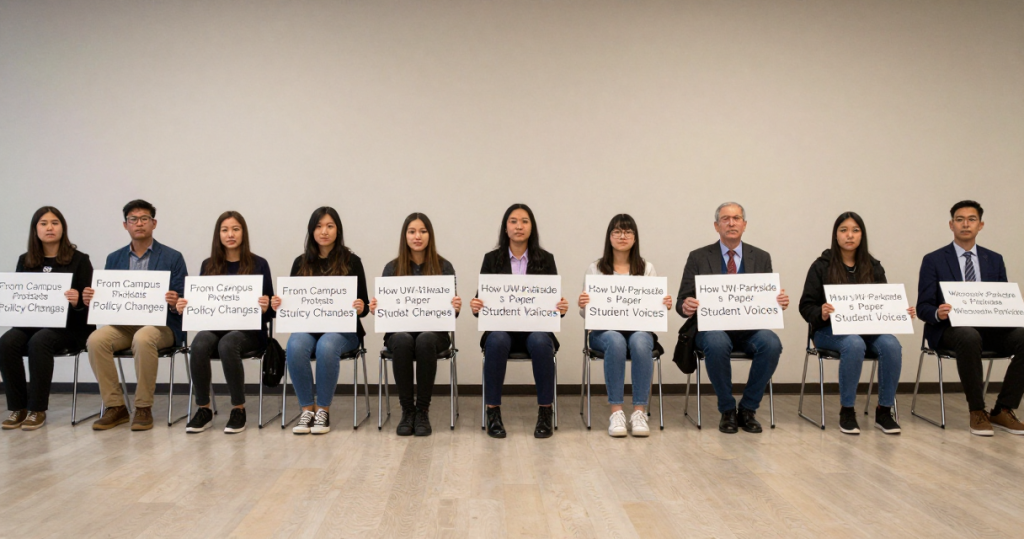
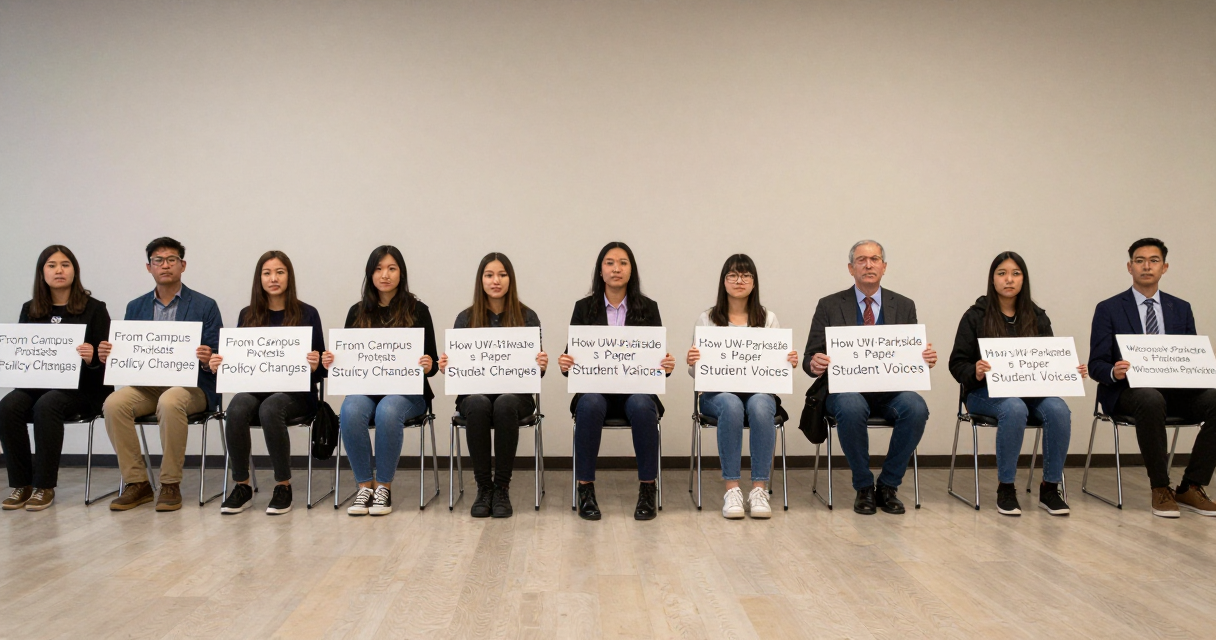
Parkside Campus Chronicle at the University of Wisconsin-Parkside has long served as the primary vehicle for amplifying undergraduate concerns, turning raw frustration into documented record. Its consistent coverage creates a measurable student newspaper political impact that resonates far beyond the newsroom walls. By treating every demonstration, sit-in, and petition drive as a beat worth following, the publication forces administrators to respond on the record rather than behind closed doors. This dynamic transforms the paper from a simple campus chronicle into an accountability engine that shapes how policy gets written and rewritten.
The Mechanics of Campus Mobilization Coverage
When organizers plan a rally outside Wyllie Hall, reporters from Parkside Campus Chronicle are often the first media on the scene with press credentials recognized by university police. They document crowd size, speaker demands, and administrative responses in real time, creating a timeline that cannot be easily disputed later. This presence changes participant behavior because activists know their chants and signs will appear in print and online within hours. The resulting archive becomes a reference point for future student governments negotiating similar issues, effectively institutionalizing protest memory across graduating classes.
Editors assign beats that mirror the university’s power structure, placing writers on the Student Government Association, the Chancellor’s Cabinet, and the Board of Regents liaison committees. This structural alignment means a reporter covering a tuition freeze protest already knows which administrator controls the budget line items in question. Sources develop trust over semesters, leading to background briefings that never make the front page but inform the questions asked at public meetings. The depth of these relationships often determines whether a story breaks at 8 a.m. or gets buried until the next print cycle.
Editorial Independence and Institutional Pressure
The paper operates under a student-fee funding model that technically ties its budget to segregated university fees approved by the Board of Regents. While the chancellor cannot legally censor content, subtle pressure appears in delayed budget approvals or restricted access to media events. Senior editors navigate this by maintaining a strict firewall between advertising sales and news judgment, ensuring that a critical investigation into dining contract renewals does not kill a revenue contract with the same vendor. This discipline preserves credibility when the paper eventually endorses or opposes a specific policy referendum.
Faculty advisers play a quiet but essential role by teaching libel law and public records strategy without dictating story selection. When a reporter requests emails under Wisconsin’s open records law regarding a controversial speaker cancellation, the adviser helps format the request to survive legal scrutiny. Students learn to anticipate exemptions for personnel matters and draft follow-up appeals that cite relevant state supreme court precedents. This institutional knowledge turns a routine FOIA into a lever that can force a policy reversal before the next edition goes to press.
From Demonstration to Draft Legislation
A protest demanding gender-neutral housing often begins with a front-page photograph and a quoted list of demands. Parkside Campus Chronicle then follows the paper trail: tracking the resolution through Student Government committees, Faculty Senate debates, and finally the Chancellor’s desk for signature. Each stage receives a dedicated story that names the decision-makers and records their public positions. This longitudinal coverage prevents the common administrative tactic of delaying action until the organizers graduate.

Reporters learn to read meeting agendas for consent items that hide significant policy shifts, such as changes to the student conduct code buried in a routine “policy update” packet. By flagging these items in a weekly “Action Tracker” column, the paper gives student organizations a two-week window to mobilize testimony before a vote. The transparency forces officials to defend changes in plain language rather than bureaucratic jargon, often resulting in amendments that reflect student input before final adoption.
Digital Amplification and Archival Power
The transition to a digital-first workflow means breaking news from a sit-in at the Student Center hits the website before the protesters leave the building. Live-tweet threads embedded in articles create a real-time narrative that local television stations and the Kenosha News frequently cite as their primary source. This amplification extends the paper’s reach beyond the 4,500-student enrollment, drawing alumni and state legislators into comment threads that administrators monitor closely.
Searchable archives stretching back decades allow current editors to contextualize modern demands with historical precedent. When students push for a multicultural center in 2024, a 1992 series on the same topic reveals which promises were made, which were funded, and which were quietly dropped during a budget crisis. Linking past coverage in new stories creates an accountability chain that makes it politically expensive for leaders to recycle failed solutions. The archive also serves as a training manual, showing new reporters how prior staffs navigated similar confrontations.
Opinion Pages as Policy Laboratories
The editorial board’s unsigned opinions carry weight because they represent a consensus built through structured debate among section editors. Before endorsing a referendum on segregated fee allocation, the board interviews proponents and opponents, then publishes a point-counterpoint package that frames the trade-offs. This process models deliberative democracy for a student body that often experiences governance only through voting apps.
Guest columns from marginalized communities, international students navigating visa compliance, veterans using GI Bill benefits, parents balancing childcare and coursework, introduce policy blind spots that standard reporting misses. A first-person account of navigating the financial aid appeal process can trigger a review of the forms themselves more effectively than a third-party investigation. The opinion section thus functions as a rapid-prototyping zone for policy ideas that later appear in formal Student Government resolutions.
Training the Next Generation of Watchdogs
Newsroom alumni frequently cite the experience of covering a contentious Board of Regents meeting as the moment they understood the mechanics of public power. The paper runs a semester-long “Covering Power” workshop where students role-play press conferences with hostile administrators played by faculty volunteers. They practice the art of the follow-up question that pierces a talking point, learning to ask “What specific metric will you use to evaluate this pilot program?” instead of “Do you support the program?”

These skills transfer directly to civic engagement after graduation. Former editors populate city councils, school boards, and nonprofit advocacy groups across southeastern Wisconsin. They bring a fluency in Robert’s Rules, open meetings law, and budget line-item analysis that originated in late-night layout sessions at Parkside Campus Chronicle office. The pipeline from campus beat reporter to community watchdog creates a feedback loop where alumni return as sources, mentors, and donors who understand the paper’s strategic value.
Sustaining Impact Through Structural Resilience
Leadership turnover every May threatens institutional memory, so the paper invests heavily in transition binders that map key sources, pending FOIA requests, and unwritten norms for dealing with specific administrators. Outgoing editors conduct exit interviews with their successors, walking through the physical newsroom to explain why the police scanner sits on the left monitor and the FOIA log lives in the top drawer. This ritual preserves the operational knowledge that keeps the accountability machine running despite constant personnel change.
Revenue diversification through grants, alumni donations, and community sponsorships reduces dependence on segregated fees that could be weaponized during political conflicts. A dedicated development officer, often a recent graduate, cultivates relationships with local foundations that value civic journalism. This financial cushion allows the paper to pursue a months-long investigation into campus mental health wait times without fear that a single budget cycle will kill the project. The result is a newsroom that can plan coverage arcs spanning multiple semesters, matching the timeline of policy change itself.

I grew up in the Milwaukee area and have always loved campus life, so covering UW‑Parkside’s student newspaper feels like home. I enjoy highlighting the stories that matter to our community and helping students find their voice.